Why Acorns Beats Savings Accounts Now

Photo by Pixabay on <a href="https://www.pexels.com/photo/stock-exchange-board-210607/" rel="nofollow">Pexels.com</a>
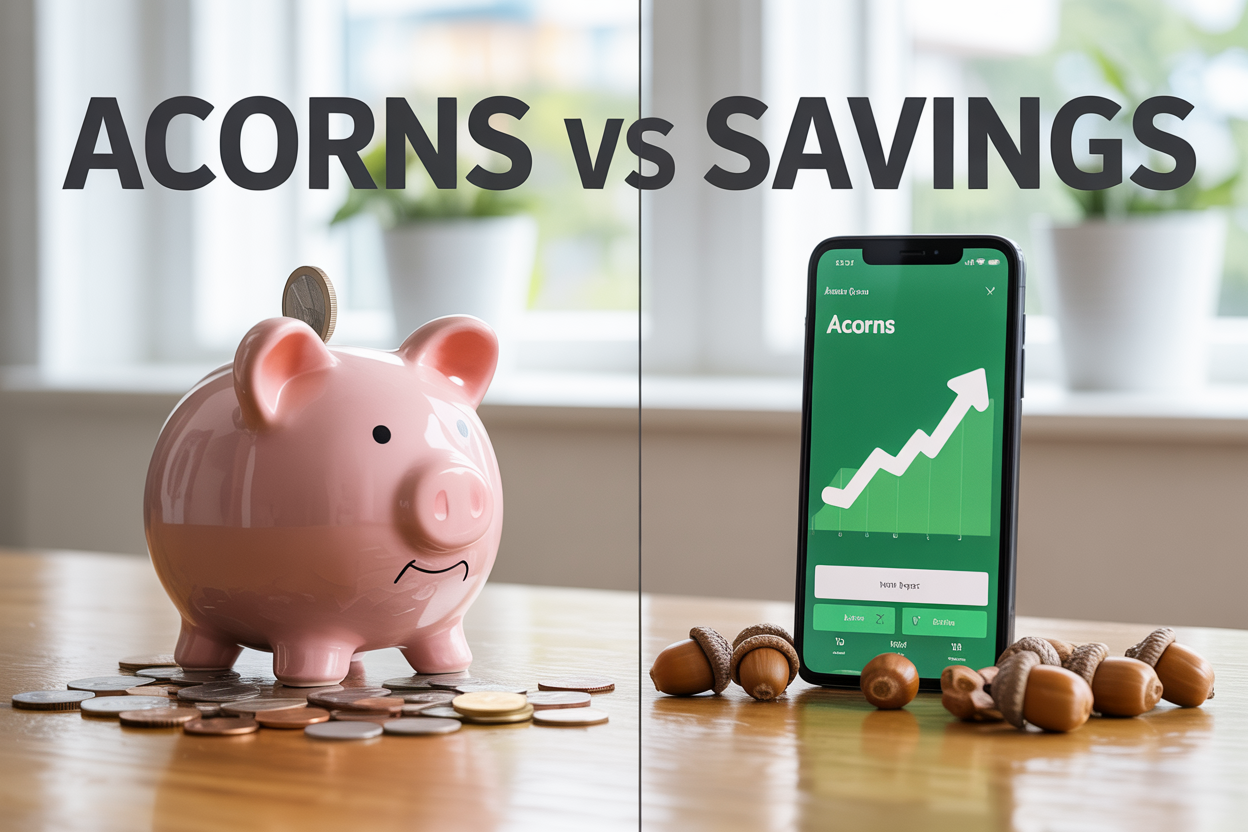
Your savings account is barely keeping up with inflation, and you’re watching your purchasing power shrink month after month. If you’re tired of earning pennies while your money loses value, it’s time to discover why the Acorns investment app is crushing traditional savings accounts in 2024.
This guide is for everyday people who want better returns without becoming finance experts—whether you’re a college student with $50 to invest or a working professional ready to make your spare change work harder.
We’ll break down how Acorns vs. savings account returns stack up in real numbers, showing you why this micro-investing platform consistently beats bank interest rates. You’ll also learn how Acorns’ automated investing system turns your daily purchases into a growing investment portfolio, plus get an honest Acorns app review covering both the benefits and potential drawbacks you need to know before switching from your current savings strategy.
Traditional Savings Accounts Are Failing Modern Savers

Inflation Outpaces Savings Account Interest Rates
Your savings account is quietly losing money every day, even when you’re earning interest. While most traditional savings accounts offer interest rates between 0.01% and 0.5%, inflation has been running significantly higher. This means your purchasing power decreases over time, making your money worth less tomorrow than it is today.
When you compare Acorns vs. savings account performance, the difference becomes stark. Your $10,000 sitting in a savings account earning 0.1% annual interest will grow to just $10,010 after a year. Meanwhile, inflation at 3% means you’ll need $10,300 to buy what $10,000 could purchase today. You’re essentially losing $290 in purchasing power annually.
This wealth erosion happens gradually, making it easy to ignore. You might feel secure watching your account balance stay stable or grow slightly, but you’re actually falling behind financially. The longer you keep substantial amounts in traditional savings accounts, the more ground you lose to inflation.
Banks Offer Minimal Returns on Your Money
Banks have little incentive to offer competitive interest rates on your savings. They profit by lending your deposited money at much higher rates while paying you minimal returns. Your money works hard for them but barely works for you.
Most major banks offer savings rates well below 1%, even during periods of economic growth. Credit unions and online banks might offer slightly better rates, but they still pale compared to historical market returns. You’re essentially providing banks with cheap capital while accepting returns that don’t keep pace with economic growth.
The banking system treats your savings as a commodity they can access cheaply. They know most people won’t move their money for small rate differences, so they maintain artificially low interest rates. Your loyalty costs you money when better savings account alternatives exist.
Opportunity Cost of Keeping Cash Idle
Every dollar you keep in a low-yield savings account represents a missed opportunity for growth. While you earn pennies in interest, the same money could potentially generate substantially higher returns through strategic investing.
Micro investing platforms like Acorns offer automated investing apps that put your money to work in diversified portfolios. Instead of earning 0.1% annually, your money could participate in market growth that has historically averaged around 7-10% over long periods. This difference compounds dramatically over time.
The opportunity cost becomes more significant as your savings grow. If you have $5,000 earning 0.1% in savings versus a conservative investment portfolio earning 5% annually, you’re missing out on approximately $245 in additional returns each year. Over a decade, this difference could amount to thousands of dollars in lost growth potential.
Limited Growth Potential for Long-Term Goals
Traditional savings accounts cannot realistically help you achieve significant long-term financial goals. Whether you’re saving for a house down payment, retirement, or your children’s education, the minimal growth from savings accounts makes these goals much harder to reach.
Consider retirement planning: if you save $200 monthly in a savings account earning 0.5%, you’ll have about $24,300 after 10 years. The same $200 invested monthly with compound interest investing at a 7% average return could grow to approximately $33,400. The power of compound growth becomes even more pronounced over longer periods.
Acorns investment returns demonstrate how micro investing benefits accumulate over time. By automatically investing small amounts regularly, you harness market growth that savings accounts simply cannot match. The Acorns investment app makes this process effortless, turning everyday purchases into investment opportunities that build wealth gradually but consistently.
For investment apps for beginners, the learning curve with platforms like Acorns is minimal compared to traditional investing, yet the growth potential far exceeds what any savings account can offer. Your long-term financial security depends on putting your money in vehicles that can actually grow your wealth rather than just preserve it.
Acorns Investment Platform Delivers Superior Returns

Automated Investing Beats Manual Savings Habits
Your busy lifestyle makes it nearly impossible to save consistently with traditional methods. The Acorns investment app solves this problem by automating your entire investment process. When you connect your debit and credit cards to the platform, it rounds up every purchase to the nearest dollar and invests the spare change automatically.
This micro-investing platform removes the biggest obstacle to building wealth: your own inconsistent habits. You don’t need to remember to transfer money to savings or debate whether you can afford to invest this month. The automated investing apps handle everything in the background while you focus on your daily life.
Your psychological barriers disappear when investing becomes invisible. Research shows that people who rely on manual savings fail to contribute regularly, often going months without adding to their accounts. With Acorns, you’re investing multiple times per week without even thinking about it. Your coffee purchase becomes a $0.50 investment, and your gas fill-up adds another $0.75 to your portfolio.
The compound interest investing effect amplifies over time because you’re consistently feeding your investment account. Where manual savers might contribute $100 sporadically, you could easily invest $50-100 monthly through spare change alone, creating a steady growth pattern that outpaces traditional savings approaches.
Diversified Portfolio Growth Outperforms Bank Interest
Your savings account typically offers 0.01% to 0.50% annual interest, which doesn’t even keep pace with inflation. Acorns investment returns come from diversified exchange-traded funds (ETFs) that historically deliver much higher growth potential.
When you invest through this platform, your money gets spread across thousands of stocks and bonds through professionally managed portfolios. You’re not putting all your eggs in one basket like you do with a single savings account. Instead, you own tiny pieces of major companies like Apple, Microsoft, and Amazon, plus government and corporate bonds for stability.
The investment apps for beginners approach means you don’t need to research individual stocks or understand complex financial markets. Your portfolio automatically rebalances to maintain proper diversification as market conditions change. This professional management would typically cost thousands in fees if you hired a financial advisor.
Over the past decade, diversified portfolios have averaged 7-10% annual returns, compared to savings accounts that barely hit 1% even during favorable rate periods. While past performance doesn’t guarantee future results, this historical data shows why many people are choosing Acorns vs. savings account strategies for their financial goals.
Dollar-Cost Averaging Reduces Market Risk
Your automatic investments through spare change create a powerful risk-reduction strategy called dollar-cost averaging. Instead of trying to time the market or making large lump-sum investments, you’re buying small amounts consistently regardless of whether stock prices are high or low.
When markets drop, your regular contributions buy more shares at cheaper prices. When markets rise, you buy fewer shares but benefit from the increased value of shares you already own. This approach smooths out the volatility that scares many people away from investing.
Traditional savings account alternatives don’t offer this advantage because your money sits in cash, missing opportunities during market upswings and failing to benefit from downturns. Your automated micro-investing strategy keeps you invested through all market cycles, which historically leads to better long-term outcomes.
The micro investing benefits extend beyond risk reduction. You’re building wealth without the stress of watching daily market fluctuations or making emotional decisions about when to invest. Your consistent contributions happen automatically, whether the market gained 5% or lost 5% that week, protecting you from the psychological mistakes that hurt many investors’ returns.
Your traditional savings account isn’t keeping up with your financial goals anymore. While banks offer measly interest rates that barely cover inflation, Acorns gives you the chance to actually grow your money through smart investing. The platform makes it simple to start building wealth without needing thousands of dollars or complex market knowledge.
You don’t have to settle for watching your savings lose purchasing power year after year. Acorns’ automated investing approach lets you put your spare change to work and potentially earn returns that savings accounts simply can’t match. Take control of your financial future today and give your money the opportunity to grow the way it deserves.