Is Acorns Safe for New Investors

Photo by Pixabay on <a href="https://www.pexels.com/photo/100-u-s-dollar-banknotes-534229/" rel="nofollow">Pexels.com</a>
Is Acorns Safe for New Investors

You’re thinking about starting your investment journey with Acorns, but you want to know if this micro-investing app is actually safe for someone just getting started. As a new investor, you need clear answers about whether you can trust Acorns with your money and how it stacks up against other beginner-friendly platforms.
This guide is designed specifically for investment newcomers who want to understand Acorns app safety before putting their hard-earned cash on the line. We’ll break down everything you need to know in plain English, without the confusing financial jargon that often scares people away.
You’ll discover how Acorns protects your money through bank-level security and SIPC insurance coverage. We’ll also walk through the fee structure so you know exactly what you’re paying for, and explain the real investment risks you should consider as a beginner. By the end, you’ll have a complete picture of whether Acorns is the right starting point for your investment goals.
Understanding Acorns Investment Platform
How Acorns Works for Beginners
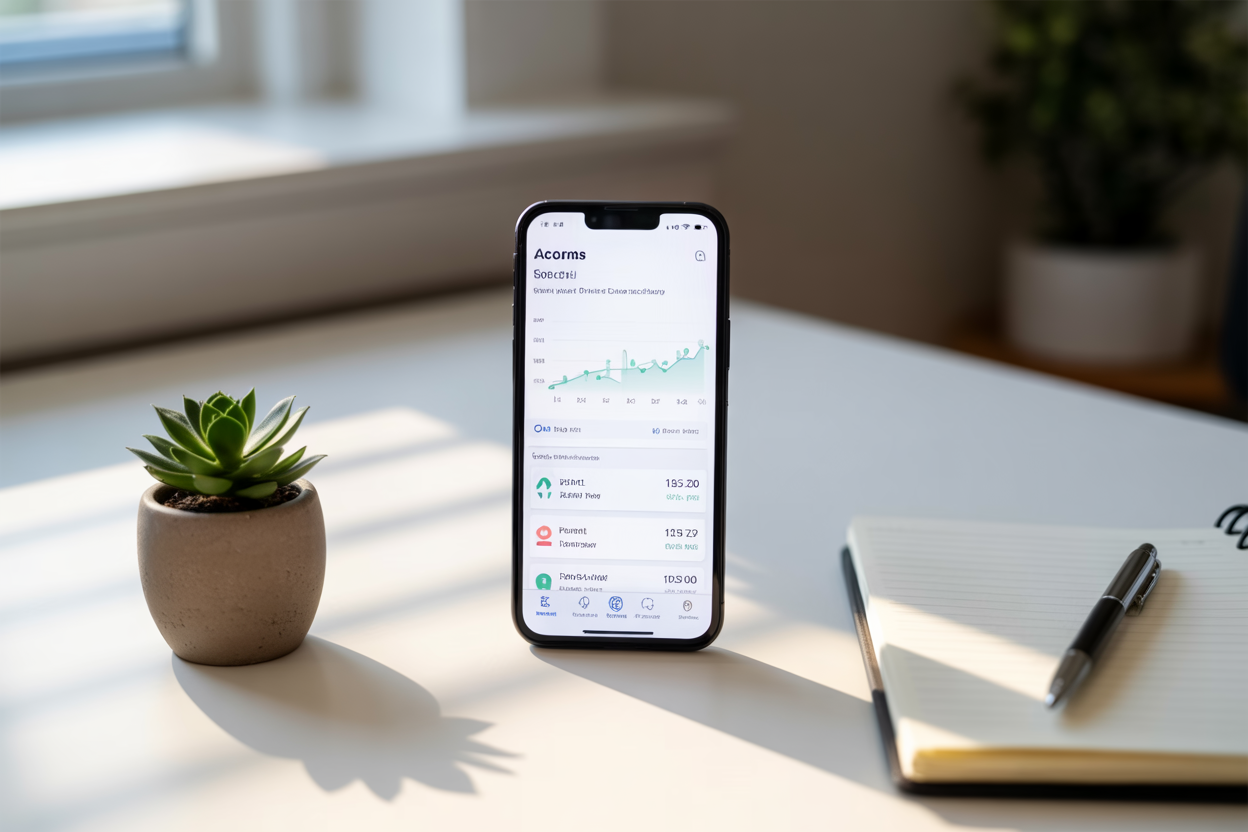
Acorns takes the complexity out of investing by automating the entire process for you. When you connect your debit or credit cards to the Acorns app, it rounds up every purchase you make to the nearest dollar and invests the spare change into a diversified portfolio of exchange-traded funds (ETFs). Say you buy a coffee for $3.25 – Acorns automatically invests the 75 cents difference.
The Acorns investment platform review consistently highlights this “set it and forget it” approach as perfect for beginners who feel overwhelmed by traditional investing. You don’t need to research individual stocks or time the market. Instead, your money gets spread across thousands of companies through professionally managed ETF portfolios based on your risk tolerance and investment timeline.
Your investments grow through a process called dollar-cost averaging, which means you’re consistently buying small amounts regardless of market conditions. This strategy helps smooth out market volatility over time, making Acorns safe for beginners who worry about investing during market downturns.
The app also offers educational content and market insights to help you understand what’s happening with your money. You can track your portfolio performance, see how your round-ups add up, and learn basic investment principles without the pressure of making complex decisions.
Account Types and Investment Options Available
You can choose from three main Acorns account types, each designed for different financial goals and life stages. The Personal account focuses on basic investing with round-ups and recurring investments. This option works well if you want to start building wealth through micro investing safety features while learning the ropes.
The Personal Plus account includes everything from the basic plan plus a checking account with no overdraft fees, early direct deposit, and real-time round-ups. This tier appeals to users who want their everyday banking integrated with their investment strategy.
The Premium account adds retirement planning through an IRA option, educational content for children, and investment accounts for kids. This comprehensive package suits families looking to build long-term wealth across multiple generations.
Your investment options within each account include five different ETF portfolios ranging from conservative to aggressive. Conservative portfolios hold more bonds and lower-risk investments, while aggressive portfolios contain more stocks with higher growth potential. Acorns automatically rebalances these portfolios to maintain your target allocation, saving you the hassle of manual adjustments.
You can also set up recurring investments beyond round-ups, contributing weekly, monthly, or whatever schedule works for your budget. Some users prefer this predictable approach over relying solely on purchase round-ups.
Minimum Investment Requirements
Acorns eliminates traditional investment barriers by requiring no minimum balance to open an account. You can start investing immediately with just your first round-up transaction, which could be as little as one cent. This accessibility makes Acorns particularly attractive for new investors who might have only small amounts to invest initially.
Unlike many investment platforms that demand $1,000 or more to begin, Acorns lets you build your portfolio gradually through spare change. Your round-ups typically range from one cent to 99 cents per transaction, meaning you’re investing tiny amounts that won’t strain your budget.
However, keep in mind that while there’s no minimum to start, Acorns does charge monthly fees regardless of your account balance. The Personal account costs $3 per month, Personal Plus runs $5 monthly, and Premium costs $12 per month. These fees can eat into small balances, so you’ll want to build your account value over time to minimize their impact on your returns.
Many financial experts suggest having at least $100-200 in your account before the monthly fees become reasonable relative to your balance. You can reach this threshold faster by setting up recurring investments alongside your round-ups, or by using the “round up multiplier” feature that can round up your purchases by 2x, 3x, or even 10x the normal amount.
Security Measures and Regulatory Protection

FDIC Insurance Coverage for Your Deposits
When you’re considering the Acorns app safety, you’ll be pleased to know that your cash deposits receive solid protection through FDIC insurance. Your money held in Acorns checking accounts is insured up to $250,000 per depositor through their banking partner, Lincoln Savings Bank. This means if anything happens to the bank, your deposits are covered by the federal government.
Your Acorns Later retirement accounts also benefit from FDIC insurance coverage for any uninvested cash sitting in your account. However, you should understand that once your money is invested in ETFs or other securities, FDIC insurance no longer applies. Instead, those investments fall under SIPC protection, which we’ll discuss shortly.
The FDIC protection extends to your round-ups and any direct deposits you make into your Acorns accounts. This coverage gives you peace of mind knowing that your cash is protected while you’re building your investment habits. For new investors wondering “is Acorns safe for beginners,” this federal backing provides a strong foundation of security.
Your invested funds receive protection through the Securities Investor Protection Corporation (SIPC), which covers up to $500,000 per customer, including $250,000 in cash claims. This Acorns SIPC protection shields you from broker-dealer failures, though it doesn’t protect against market losses from your investment choices.
Identity Protection and Fraud Prevention
Your personal information receives multiple layers of protection through Acorns security features designed specifically for mobile investing. The platform uses 256-bit SSL encryption to protect your data during transmission, the same level of security that major banks employ for online transactions.
Acorns implements two-factor authentication to prevent unauthorized access to your account. When you log in from a new device, you’ll receive a verification code on your registered phone number or email. This extra step significantly reduces the risk of someone gaining access to your account even if they somehow obtain your password.
Your account monitoring includes real-time fraud detection systems that flag unusual activity patterns. If someone tries to access your account from an unfamiliar location or device, Acorns will notify you immediately and may temporarily freeze suspicious transactions until you verify your identity.
The platform stores your sensitive financial data using bank-level security protocols. Your Social Security number, bank account information, and other personal details are encrypted and stored separately from your login credentials. This separation means that even if one security layer is compromised, your most sensitive information remains protected.
You can also set up account alerts to monitor all activity on your Acorns account. These notifications will inform you about deposits, withdrawals, investment purchases, and any changes to your account settings. This transparency allows you to spot any unauthorized activity quickly and report it to customer support immediately.
Fees and Cost Structure Analysis

Monthly Subscription Fee Breakdown
Your monthly fees with Acorns vary depending on which plan you choose, making it important to understand what you’re paying for. The Acorns Personal plan costs $3 per month and includes your investment account, retirement account, and checking account with no minimum balance requirements. If you want to add family features, the Acorns Family plan runs $5 monthly and lets you open investment accounts for your kids.
What makes these Acorns fees for new investors particularly challenging is that they don’t scale with your account balance. Whether you have $10 or $10,000 invested, you pay the same monthly fee. This flat-rate structure means smaller accounts get hit harder percentage-wise, which can eat into your returns significantly when you’re starting out.
You should also know that Acorns automatically debits this fee from your funding source, not your investment account. This means you need to maintain enough money in your linked bank account or debit card to cover the monthly charge, or you’ll face declined payment fees.
Hidden Costs You Should Know About
Beyond the obvious monthly subscription, several less visible costs can impact your investment returns. When you invest through Acorns, you’re buying into ETFs that charge their own expense ratios. These typically range from 0.03% to 0.25% annually, depending on which portfolio you select. While these might seem small, they compound over time and reduce your overall gains.
Transfer fees can also catch you off guard. Moving money out of Acorns to your bank account is free, but if you need to wire funds or require expedited transfers, you’ll face additional charges. International investors or those using certain bank types might encounter other transaction fees.
Your investment activities can trigger tax implications that aren’t technically fees but still cost you money. Acorns automatically rebalances your portfolio and reinvests dividends, which can create taxable events in your regular investment account. These transactions generate tax documents you’ll need to handle during tax season.
How Fees Impact Small Investment Returns
When you’re just starting with micro investing, fees can dramatically affect your returns. If you’re investing $25 monthly and paying $3 in fees, that represents a 12% annual fee rate on your contributions. This percentage drops as your balance grows, but early on, it can seriously hamper your investment growth.
Consider this example: investing $50 monthly with a 7% annual return but paying $36 in annual fees means you’re only netting about 1% growth in your first year. Your money needs time to grow large enough where the flat fee becomes a smaller percentage of your total balance.
Acorns investment platform review data shows that accounts under $1,000 often struggle to overcome the fee burden in their first 12-18 months. You’ll want to commit to consistent investing and patience for the fees to become more reasonable relative to your growing balance.
Your round-up investments can help offset this challenge by automatically investing spare change from purchases, potentially adding $20-40 monthly without you thinking about it. However, you should realistically expect that building meaningful wealth through Acorns requires either larger regular contributions or a long-term commitment where compound growth eventually outpaces the monthly fee impact.
Investment Risk Assessment for New Investors

Long-term vs Short-term Investment Risks
When you’re just starting with Acorns, understanding the difference between short-term and long-term investment risks is crucial for your financial success. Your investment timeline dramatically affects how much risk you’ll face and what returns you can expect.
If you’re planning to use your Acorns account for short-term goals – anything under three to five years – you’ll face higher volatility risks. Stock markets can swing wildly from month to month, and your portfolio might be worth less tomorrow than it is today. Your round-ups and regular investments could show negative returns during market downturns, which can be unsettling when you’re new to investing.
However, your risk profile changes significantly when you think long-term with Acorns. Historical data shows that diversified portfolios like those offered through the platform tend to smooth out over time. Your micro-investing approach actually works in your favor here – you’re buying into the market gradually through dollar-cost averaging, which helps reduce the impact of market timing.
Your Acorns investment risks decrease as your time horizon extends because you have more opportunity to ride out market cycles. The platform’s diversified ETF portfolios are designed to capture long-term growth, making Acorns safe for beginners who can commit to staying invested for years rather than months.
Protection Against Major Market Downturns
Your Acorns portfolio won’t be immune to major market corrections, but the platform offers several built-in protections that new investors should understand. When markets crash – like during the 2008 financial crisis or the COVID-19 pandemic – your account value will likely drop alongside broader market indices.
Your protection comes through diversification rather than guaranteed returns. Acorns spreads your investments across thousands of stocks and bonds through ETFs, so you’re not putting all your eggs in one basket. This diversification helps cushion the blow when specific sectors or companies face trouble.
The automatic investing features actually provide another layer of protection during downturns. Your round-ups continue flowing into your account even when prices are falling, meaning you’re buying more shares at lower prices. This dollar-cost averaging can accelerate your recovery when markets bounce back.
Your SIPC protection covers up to $500,000 if Acorns ever fails as a company, but this doesn’t protect against market losses. Remember that Acorns investment risks are tied to market performance, not the platform’s safety. During major downturns, your best protection is patience and continuing to invest regularly rather than panicking and withdrawing your funds at the worst possible time.
User Experience and Account Management

Mobile App Interface and Ease of Use
You’ll find that Acorns has designed their mobile app with beginners in mind, making it one of the most user-friendly investment platforms available today. The Acorns app safety extends beyond just financial security—the interface itself protects you from making costly mistakes through its simplified design.
When you first open the app, you’re greeted with a clean dashboard that displays your account balance, recent round-ups, and portfolio performance in easy-to-understand visuals. The color-coded charts help you track your progress without needing a finance degree to interpret complex graphs. Your investment portfolio is broken down into simple categories like “Conservative” or “Aggressive,” removing the guesswork that often intimidates new investors.
The round-up feature works seamlessly in the background. Once you link your checking account or credit cards, you don’t need to think about investing—the app automatically rounds up your purchases and invests the spare change. You can review these transactions anytime, giving you complete transparency over where your money goes.
Navigation feels intuitive, with all major functions accessible within two taps. Whether you want to make a one-time investment, adjust your portfolio allocation, or check your investment performance, everything sits exactly where you’d expect to find it. The app also includes educational content that explains investing basics in plain English, helping you understand what’s happening with your money as you learn.
Account Access and Withdrawal Process
Your account access with Acorns follows industry-standard security protocols while maintaining convenience for daily use. You’ll log in using either a PIN, fingerprint, or face recognition, depending on your device capabilities. The app requires you to re-authenticate after periods of inactivity, striking a good balance between security and usability.
When you need to withdraw money, the process is straightforward but includes helpful guardrails. The app clearly shows your current balance, any pending investments, and estimated withdrawal timeframes before you complete the transaction. You can withdraw partial amounts or close your account entirely, though the app will remind you of any tax implications for your investment gains.
Standard withdrawals typically take 3-5 business days to reach your bank account, which aligns with most beginner investment app security practices. The app provides real-time updates on your withdrawal status, so you’re never left wondering where your money stands. You can also set up automatic withdrawals if you prefer a hands-off approach to managing your cash flow.
Emergency withdrawals are available but may carry additional processing time. The app walks you through each step, explaining any fees or implications before you confirm your decision. This transparency helps you make informed choices about accessing your invested funds, especially important when you’re just starting your investment journey.

Your money’s safety with Acorns comes down to strong security measures and solid regulatory backing. The platform uses bank-level encryption and is protected by SIPC insurance, which means your investments are covered up to $500,000. While the fees might seem small at first glance, they can add up over time, especially when you’re just starting with smaller amounts. The automated investing approach takes the guesswork out of building a portfolio, but you’ll still face the normal ups and downs that come with any investment.
For new investors who want to start small and learn the ropes, Acorns offers a safe entry point into the investment world. The round-up feature makes investing feel effortless, and the educational resources help you understand what’s happening with your money. Just keep an eye on those monthly fees and make sure you’re contributing enough to make them worthwhile. If you’re ready to begin your investment journey with training wheels on, Acorns provides the security and simplicity you need to get started.